
25 Hotel Governance Problems
25 Hotel Governance Problems — and Practical Solutions (2025 Edition)
A board-to-lobby playbook for owners, GMs, and asset managers: solve the biggest governance headaches—from risk, compliance, labor, and cybersecurity to AI, social media, sustainability, and franchise alignment—using field-tested checklists, KPIs, and policy templates.
Updated: 22 August 2025 • Reading time ~20–25 minutes
Applies to: Independent, Branded, Franchise, and Owner-Operator hotels
Regions: Global
Why Governance Matters Now
The hospitality cycle is strong yet volatile. Industry outlooks show sustained demand even as margins feel pressure from labor, financing, and guest acquisition costs. Meanwhile, regulation is tightening (privacy, accessibility, sustainability), technology risks are rising (AI, cyber, data), and social media can swing reputation in hours. Good governance turns these pressures into resilience—clarifying accountability, codifying risk controls, and aligning brand promises with lived guest experience.
How to use this guide: Browse the table of contents, jump to any issue, and copy the “policy snippet” and “first-week actions” into your operations manual. Each section includes links to credible sources and social insights to help you build leadership buy-in.
Table of Contents
Board & Ownership Oversight
Enterprise Risk Management (ERM)
Regulatory & License Compliance
Labor Shortage & Wage Pressure
Workplace Culture & DEI Governance
Owner–Brand–Operator Misalignment
CapEx Planning & FF&E Reserve Leakage
Revenue & Price Integrity Governance
OTA Dependency & Contract Risk
Data Privacy & Consent
Cybersecurity & Ransomware Readiness
AI Use Policy & Algorithmic Risk
Social Media Governance & Crisis Playbook
Influencer & UGC Contract Controls
Review & Reputation Management
ESG & Greenwashing Risk
Supply Chain & Vendor Due Diligence
Health, Safety & Food Hygiene
Anti-Trafficking & Guest Safety
Accessibility & Inclusive Design
Cash Controls, Fraud & Internal Audit
Loyalty, Fees & Transparency
Guest Disputes, Chargebacks & ADR
Physical Crisis & Business Continuity
Innovation Governance & Pilot-to-Scale
Context: What social and industry data say in 2024–2025
Demand remains healthy, but cost pressures (labor, financing, utilities) squeeze NOI; industry bodies highlight the need for technology, AI, and data security to protect margins. Sources
A board-to-lobby playbook for owners, GMs, and asset managers: solve the biggest governance headaches—from risk, compliance, labor, and cybersecurity to AI, social media, sustainability, and franchise alignment—using field-tested checklists, KPIs, and policy templates.
Updated: 22 August 2025 • Reading time ~20–25 minutes
Applies to: Independent, Branded, Franchise, and Owner-Operator hotels
Regions: Global
Why Governance Matters Now
The hospitality cycle is strong yet volatile. Industry outlooks show sustained demand even as margins feel pressure from labor, financing, and guest acquisition costs. Meanwhile, regulation is tightening (privacy, accessibility, sustainability), technology risks are rising (AI, cyber, data), and social media can swing reputation in hours. Good governance turns these pressures into resilience—clarifying accountability, codifying risk controls, and aligning brand promises with lived guest experience.
How to use this guide: Browse the table of contents, jump to any issue, and copy the “policy snippet” and “first-week actions” into your operations manual. Each section includes links to credible sources and social insights to help you build leadership buy-in.
Table of Contents
Board & Ownership Oversight
Enterprise Risk Management (ERM)
Regulatory & License Compliance
Labor Shortage & Wage Pressure
Workplace Culture & DEI Governance
Owner–Brand–Operator Misalignment
CapEx Planning & FF&E Reserve Leakage
Revenue & Price Integrity Governance
OTA Dependency & Contract Risk
Data Privacy & Consent
Cybersecurity & Ransomware Readiness
AI Use Policy & Algorithmic Risk
Social Media Governance & Crisis Playbook
Influencer & UGC Contract Controls
Review & Reputation Management
ESG & Greenwashing Risk
Supply Chain & Vendor Due Diligence
Health, Safety & Food Hygiene
Anti-Trafficking & Guest Safety
Accessibility & Inclusive Design
Cash Controls, Fraud & Internal Audit
Loyalty, Fees & Transparency
Guest Disputes, Chargebacks & ADR
Physical Crisis & Business Continuity
Innovation Governance & Pilot-to-Scale
Context: What social and industry data say in 2024–2025
Demand remains healthy, but cost pressures (labor, financing, utilities) squeeze NOI; industry bodies highlight the need for technology, AI, and data security to protect margins. Sources
Social is now a planning engine: travel inspiration and booking pathways are heavily influenced by TikTok/Instagram; benchmarks show saturated feeds but growing engagement for authentic, creator-led content. Sources
Sustainability scrutiny, accessibility, and data privacy are increasingly regulated; governance must move beyond marketing to auditable practice. Sources
1) Board & Ownership Oversight
Problem: Fragmented oversight across owners, asset managers, and operators leads to slow decisions and unclear accountability.
Solution: Charter a Hotel Governance Council (HGC) that meets quarterly. Membership: Owner rep, GM, Finance Controller, Asset Manager, HR/L&D lead, and IT/CISO (or vendor).
Mandate: approve risk appetite, CapEx thresholds, data/privacy controls, and guest-experience KPIs.
Policy snippet: “All material variances > 5% of budgeted GOP or guest NPS drops > 10pts trigger an HGC review with corrective action in 14 days.”
First-week actions: document current committees; consolidate into the HGC; publish a one-page RACI; add owner/board dashboard with NOI, RevPAR index, NPS/TrustScore, compliance status, and top 5 risks.
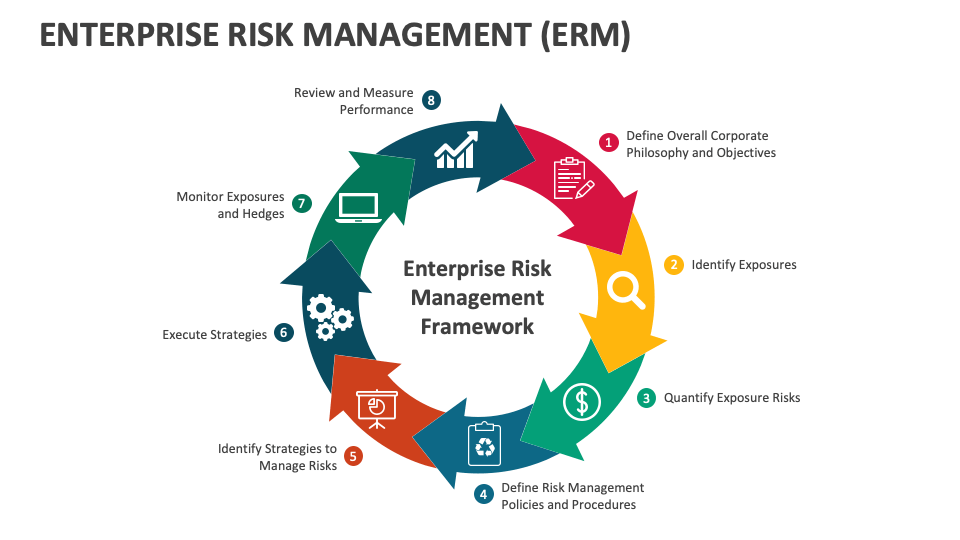
2) Enterprise Risk Management (ERM)
Problem: Hotels often manage risks ad-hoc (storms, outages, food safety, cyber) without a portfolio view.
Solution: Implement a 12-month ERM cycle: (1) identify risks; (2) score (impact x likelihood); (3) assign owners; (4) mitigations; (5) test; (6) report to HGC. Include labor shocks, wage mandates, financing/refi, and event-driven demand swings.KPIs: % of critical risks with tested controls; time-to-recover (TTR) for core systems; insurance coverage adequacy review completed.
Tooling: simple register (Sheet/Drive) with quarterly sign-offs.
3) Regulatory & License Compliance
Problem: Licenses, fire/health inspections, liquor permits, and local employment law renewals slip through the cracks.
Solution: Centralize all permits in a compliance calendar with owner-visible SLAs. Quarterly internal audits review evidence (certificates, training logs). Tie GM bonus to “zero expired permits.”
Checklist: Fire & life safety, pool, elevator, boiler, food handling, liquor, data protection filings (where applicable), waste/water reporting.
4) Labor Shortage & Wage Pressure
Problem: Persistent vacancies and rising wages compress margins and service quality.
Solution: Workforce governance that blends build (apprenticeships, cross-training) and buy (seasonal/temporary, lawful immigration channels where applicable). Implement skills matrices, flexible scheduling, and career ladders. Benchmark wages and benefits quarterly; focus on productivity via lean housekeeping, robotics where ROI > 18 months, and cloud PMS integrations.
Social insight: Employer-brand content performs best when it shows team culture and growth pathways—short-form video with staff POVs can out-engage brand promos. Data
5) Workplace Culture & DEI Governance
Problem: Inconsistent culture leads to turnover, compliance incidents, and weak guest experience.
Solution: Publish a code of conduct; train quarterly; create anonymous reporting and anti-retaliation policy; establish promotion transparency (posted roles, calibrated reviews). Track diversity across hiring funnels and leadership roles.
6) Owner–Brand–Operator Misalignment
Problem: Brand standards and owner ROI targets clash; projects stall.
Solution: Add an Alignment Matrix: each brand initiative lists owner cost, payback, KPI impact, and compliance deadline. Negotiate waivers with data; ensure change-order discipline in renovations; include asset-light alternatives (e.g., soft-goods refresh + lighting).
7) CapEx Planning & FF&E Reserve Leakage
Problem: Deferred maintenance erodes ADR and guest scores; FF&E reserves get diverted.
Solution: Five-year rolling CapEx with condition indexes; lock FF&E reserve; require HGC approval for any reallocation. Tie CapEx to KPI lift (ADR, energy intensity, NPS).
8) Revenue & Price Integrity Governance
Problem: Inconsistent fences, opaque fees, and poorly governed promotions create chargebacks, complaints, and regulatory risk.
Solution: Approve a Rate Integrity Charter: no drip pricing; consistent cancellation terms; publish “what’s included”; quarterly audits on parity and taxes/fees display. Add independent oversight of RMS overrides.
9) OTA Dependency & Contract Risk
Problem: Over-reliance on high-cost channels and MFN clauses suppresses direct revenue.
Solution: Channel governance with guardrails: cap OTA mix by season; require direct booking value props (best-value bundles, loyalty, flexible change). Review MFN/legal with counsel; negotiate promoted placements only when incremental.
10) Data Privacy & Consent
Problem: Fragmented PMS/CRM/marketing tools cause consent confusion and breach exposure.
Solution: Single Source of Consent and suppression list synced to all martech; data minimization by default; DSR (access/delete) workflow with 30-day SLA; annual DPIA for new tools; privacy by design in personalization.
11) Cybersecurity & Ransomware Readiness
Problem: Hospitality is a high-target vertical (PMS/POS, loyalty data, Wi-Fi).
Solution: Enforce MFA, least-privilege, network segmentation (guest vs ops), immutable backups, 24-hour tabletop drills, vendor security addenda, and a prepaid incident-response retainer. Train front-line teams on phishing and card-present red flags.
12) AI Use Policy & Algorithmic Risk
Problem: Uncontrolled AI pilots risk guest privacy, bias, and brand tone.
Solution: An AI Acceptable Use Policy: approved models & data, no PII in public tools, human-in-the-loop for pricing and offers, accuracy checks, and red-team reviews for prompts. Maintain an AI register of use cases with owners and KPIs.
13) Social Media Governance & Crisis Playbook
Problem: Social teams operate as a broadcast channel; crises escalate without escalation paths.
Solution: Define roles (create, approve, publish, moderate). Build a three-tier crisis matrix (Tier 1 service issue; Tier 2 safety/health; Tier 3 legal/regulatory). Prepare 5 evergreen templates (apology, update, resolution, redirect, closure). Track platform benchmarks and adjust content mix (UGC, staff stories, accessibility tips). Benchmarks
14) Influencer & UGC Contract Controls
Problem: Free-stay deals without deliverables or rights lead to wasted value and brand risk.
Solution: Always use written agreements: deliverables, posting schedule, whitelisting rights, usage period, brand safety, disclosure (#ad), and takedown clause for misrepresentation. Pay on performance (CPL/CPA) plus stay credit.
Solution: Always use written agreements: deliverables, posting schedule, whitelisting rights, usage period, brand safety, disclosure (#ad), and takedown clause for misrepresentation. Pay on performance (CPL/CPA) plus stay credit.
15) Review & Reputation Management
Problem: Unanswered reviews reduce conversion and ranking; inconsistent tone harms trust.
Solution: 24–48h response SLA for Tier 1 platforms (Google, Tripadvisor, Booking); pre-approved tone guide; route verified issues to ops with ticket numbers. Track review response rate and time-to-resolution.
16) ESG & Greenwashing Risk
Problem: Sustainability claims without data or third-party methods invite scrutiny.
Solution: Adopt a recognized framework (e.g., Cornell Hotel Sustainability Benchmarking for energy/water). Publish measurable targets (kWh per occupied room, water per guest-night) and audit annually. Link utility metering to CapEx (LEDs, HVAC, laundry heat recovery).
17) Supply Chain & Vendor Due Diligence
Problem: Single-source suppliers, opaque contracts, and labor risks.
Solution: Vendor scorecards (cost, quality, ESG, cyber posture), dual-sourcing for critical categories (linen, amenities), SLA penalties, and right-to-audit clauses. Annual conflict-of-interest attestations for procurement staff.
18) Health, Safety & Food Hygiene
Problem: Kitchen/housekeeping shortcuts become legal and reputational events.
Solution: HACCP plans, temperature logs, allergen matrix at menus, monthly mock inspections, and quarterly third-party audits. Train supervisors to spot near-misses and log corrective actions.
19) Anti-Trafficking & Guest Safety
Problem: Hotels can be exploited by traffickers; staff may miss indicators.
Solution: Mandatory training (front desk, housekeeping, security), visible hotline signage, “do-not-rent” escalation procedure, data sharing with law enforcement consistent with law, and minimal-intrusion room-check policy with dual staff when risk indicators exist.
20) Accessibility & Inclusive Design
Problem: Non-compliant rooms/websites risk lawsuits and lost demand.
Solution: Audit (rooms & website) against applicable standards; publish accessibility statements; ensure booking path can select accessible room types; train staff on service etiquette; include captions/alt text on social content.
21) Cash Controls, Fraud & Internal Audit
Problem: Cash, cards, and comps without controls invite leakage.
Solution: Segregation of duties (night audit vs cash office), surprise counts, comp/void approvals with audit trail, PCI compliance, and quarterly internal audits. Hotline for fraud concerns.
22) Loyalty, Fees & Transparency
Problem: Junk fees and opaque benefits drive complaints and regulatory action.
Solution: Publish total price early; list mandatory fees and inclusions; show loyalty benefits at booking and check-in; audit fee usage quarterly; align with consumer-protection rules.
23) Guest Disputes, Chargebacks & ADR (Alternative Dispute Resolution)
Problem: Chargebacks rise with unclear policies and poor documentation.
Solution: Clear terms at booking; e-signature on incidentals; photo evidence for damage claims; designate an ADR path (mediation/arbitration according to local law) to resolve disputes faster and cheaper.
24) Physical Crisis & Business Continuity
Problem: Storms, fire, power, water, and civil unrest can halt operations.
Solution: BCP with primary/secondary suppliers, generator test logs, water safety plan, mutual-aid agreements with nearby properties, and prewritten guest communications. Conduct annual multi-department drills.
25) Innovation Governance & Pilot-to-Scale
Problem: Random pilots waste funds; learnings get lost when leaders rotate.
Solution: Create an Innovation Register (problem, hypothesis, success metric, owner, timeline, budget). Run time-boxed pilots (6–12 weeks), publish results (win/lose), and scale only with evidence (payback, guest/NPS lift, labor minutes saved).
Mini-Playbooks You Can Copy
Social & Influencer Governance (90-Day Plan)
Week 1–2: Approvals map; crisis tiers; content pillars (guest tips, behind-the-scenes, local partners, accessibility info). Benchmarks: median engagement rate and posting cadence (pull from your platform analytics; compare with public benchmarks). See data
Week 3–6: Staff creator program (opt-in, release forms), UGC rights management, and review-response SLA.
Week 7–12: Two creator partnerships with performance clauses (post saves/shares, attributed bookings), and a “how we handle issues” explainer video pinned to profiles.
AI Policy Quickstart
Whitelist tools and models; no PII in public tools; enable DLP.
Set “human review required” gates for pricing/segments and any outbound comms.
Keep an AI use-case register with owners, data sources, and KPIs.
CapEx & Sustainability
Meter energy/water per occupied room; target annual intensity reduction; align with recognized hotel benchmarks; publish progress.
Prioritize projects with guest-visible impact (lighting, HVAC comfort) and strong payback.
Internal Linking (on this page)
Jump to: Social Governance • Cybersecurity • ESG • CapEx • OTA Risk • Accessibility
Tip: On Blogspot, these internal anchors improve UX and help discovery in Google News/Edge News by clarifying structure.
Quick FAQ
What KPIs should the HGC review monthly?
NOI vs budget, RevPAR index vs comp set, channel mix & CAC, energy/water per occupied room, staff retention/absenteeism, review score trend and response time, compliance renewals, cyber incidents, and top 5 risks.
What belongs in the public policy page?
Privacy notice, accessibility statement, sustainability commitments with metrics, anti-trafficking statement, and crisis contacts.
Sources & Further Reading
Sources & Further Reading
Deloitte, 2025 Travel Industry Outlook — trends including AI, demand, and generational shifts. Read
McKinsey, The state of tourism and hospitality 2024 — traveler sentiment and business model shifts. Read (PDF alt: Download)
AHLA, 2024/2025 State of the Hotel Industry — labor, costs, technology, taxes, and wage outlook. 2024 PDF • 2025 Update
Cornell, Hotel Sustainability Benchmarking Index — energy/water intensity benchmarks. Read
Paperchase, Essential hotel audit practices — practical compliance audit focus areas. Read
Note: Use local counsel for jurisdiction-specific rules (privacy, accessibility, labor, liquor, ADR).
Hashtags